
Prepare a work update: start with the purpose
Choose a preparation route for progress, a resource or decision request, or a period review. Use one service case to inspect openings, review checks and focused guides, and keep a preparation note.
On this page
“How is the project going? Give me a quick update.”
The difficult part is deciding what the listener needs to know. A list of completed tasks can hide the overall result. Cutting every detail can remove the evidence needed to make a decision. A brief update should help the listener make the required judgment: where things stand, what could affect the result, and what you need from them. Trim the activity log, while retaining evidence, risks, and conditions that change that judgment.
Use this as a preparation entry point: clarify the main task, then select the material it needs. Follow the focused guides for oral rehearsal, email revision, resource requests or period reviews.
Clarify the purpose before choosing the detail
“Give me a quick update” may mean share progress or make a resource request. When there is time, confirm: “I can start with the result and main risk. Do you need a progress update, or should we agree the next arrangement?” For an unexpected question, state the current position first and expand in response to questions.
Prepare four things: purpose, audience and existing context, available time and medium, and the response needed. Someone new to the project needs a sentence of background. A resource owner needs the effort and deadline. A person taking over the work needs ownership and handoffs. Choose for the actual task rather than assuming a person's title tells you everything they need.
Use the update preparation card to clarify the conversation. Check the facts and data separately.
Fictional example: a team is improving its customer service process. All people, schedules, business figures, and targets in this article and its diagrams are invented to illustrate reporting methods.
The figures compare the same team's closed tickets in July and August, with 1,200 tickets in each period. First-response compliance means responding within 30 minutes; handling time measures manual effort per ticket; complaints are reported per 1,000 tickets. Work mix and staffing still need comparability checks. The fictional before-and-after change does not establish a particular measure's causal effect. Keep these conditions with the result.
Prepare for this update's purpose
Choose the main task to see an opening, checklist and next reading for the same service case. If purposes are mixed or unclear, first clarify the main response needed; explore each route separately.
Share progress
Wording for the same fictional case
Pilot first-response compliance is 93%, two percentage points below the 95% target. Rollout still depends on integration acceptance and a small pilot. This is a status update with no decision requested; the next update is Friday.
Review the complete record
Work-update preparation note

Task selected by you: Share progress

Complete personal material and preparation notes


Your review (not verification or approval)

[ ] Retain period, definitions, target and evidence locations.

[ ] State material risks, conditions and the next update.

[ ] Confirm whether this is for awareness or includes a specific request.

Raw review value:

The following is fictional wording for the current task, not personal facts or a completed update.

Pilot first-response compliance is 93%, two percentage points below the 95% target. Rollout still depends on integration acceptance and a small pilot. This is a status update with no decision requested; the next update is Friday.

Speaking aloud: rehearse the script: https://bizthinkframe.com/articles/concise-work-update#rehearsal

A known deviation: explain risk and request: https://bizthinkframe.com/articles/project-delay-update

Writing an email: organize the opening and evidence: https://bizthinkframe.com/articles/bluf-work-email
Personal material is saved separately by language in this browser. It is not uploaded or translated. Clearing site data deletes it; keep a downloaded copy and avoid editing it in multiple tabs. Review checks reset after changes.
1. Form a judgment before listing activities
An update often loses focus because the writer has not yet decided what the evidence means. Is the project on track, behind its target, or ready for a change? A chronological account of meetings and revisions leaves that judgment to the reader.
Match the information to the audience's task. A project lead may need to decide whether a target is met, a delivery date is at risk, or extra resources are justified. “We coordinated with three departments” says little about those decisions. “First-response compliance improved by 7 percentage points, but remains 2 points below the 95% target” gives the discussion a clear starting point.
Maintain working notes whenever progress changes: current position, key evidence, risk, next action, open questions, and next update. Select from those notes when asked unexpectedly. If you cannot recall a number, say it needs checking rather than filling it in from memory.
Separate observations from explanations
Organize each issue as an observed fact, its impact, a possible cause, and an action. Mark an explanation as a hypothesis until evidence supports it. If the answer is still unclear, state what you have checked, what remains unknown, and when you expect to update the judgment.
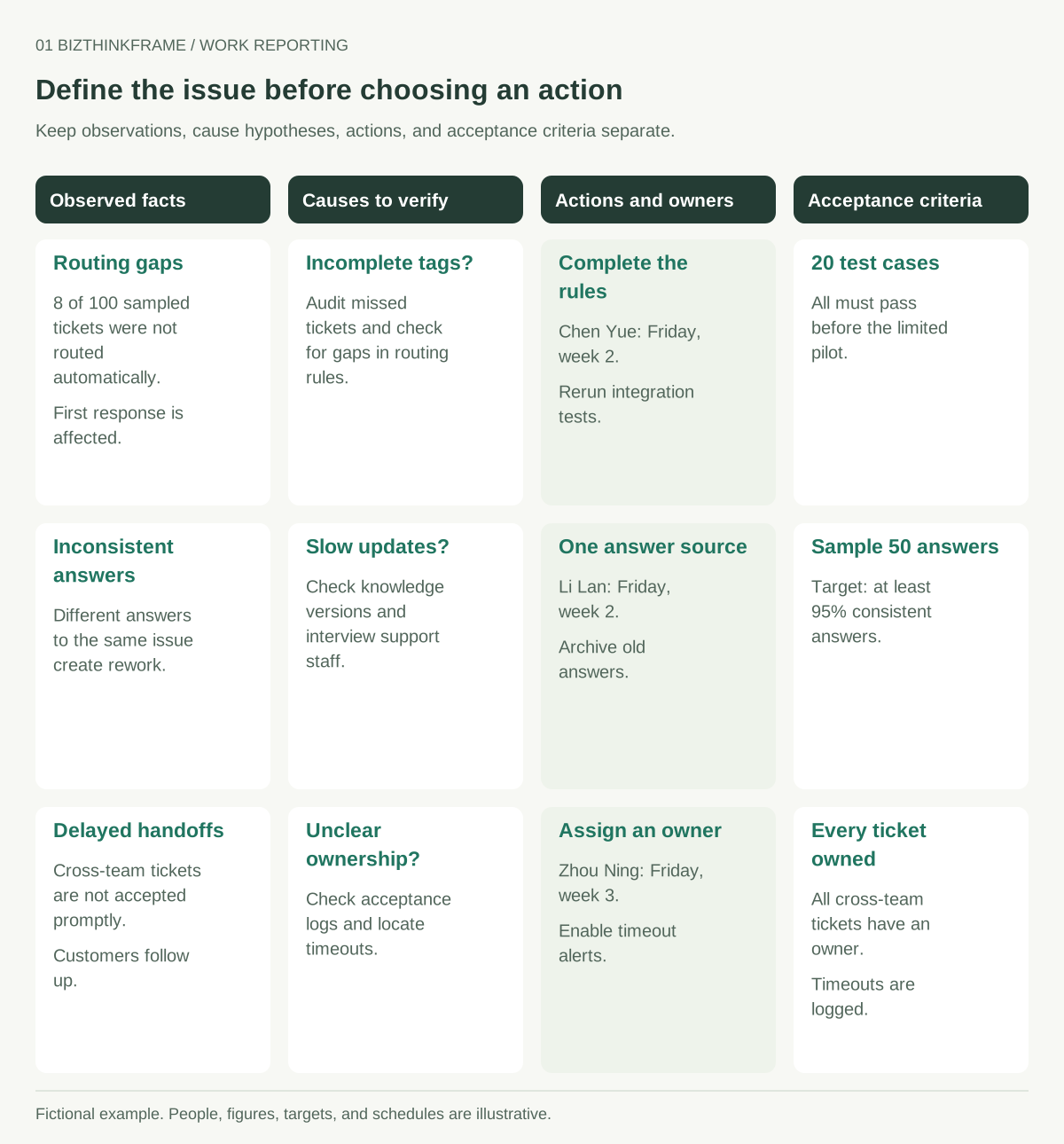
Figure 1. Turn broad complaints into issues that can be investigated, assigned, and checked. The cause explanations remain hypotheses.
For a larger project, also show how the work fits together. A simple map can connect the overall goal to the workstreams and shared resources, so the reader can place a detailed issue in context.
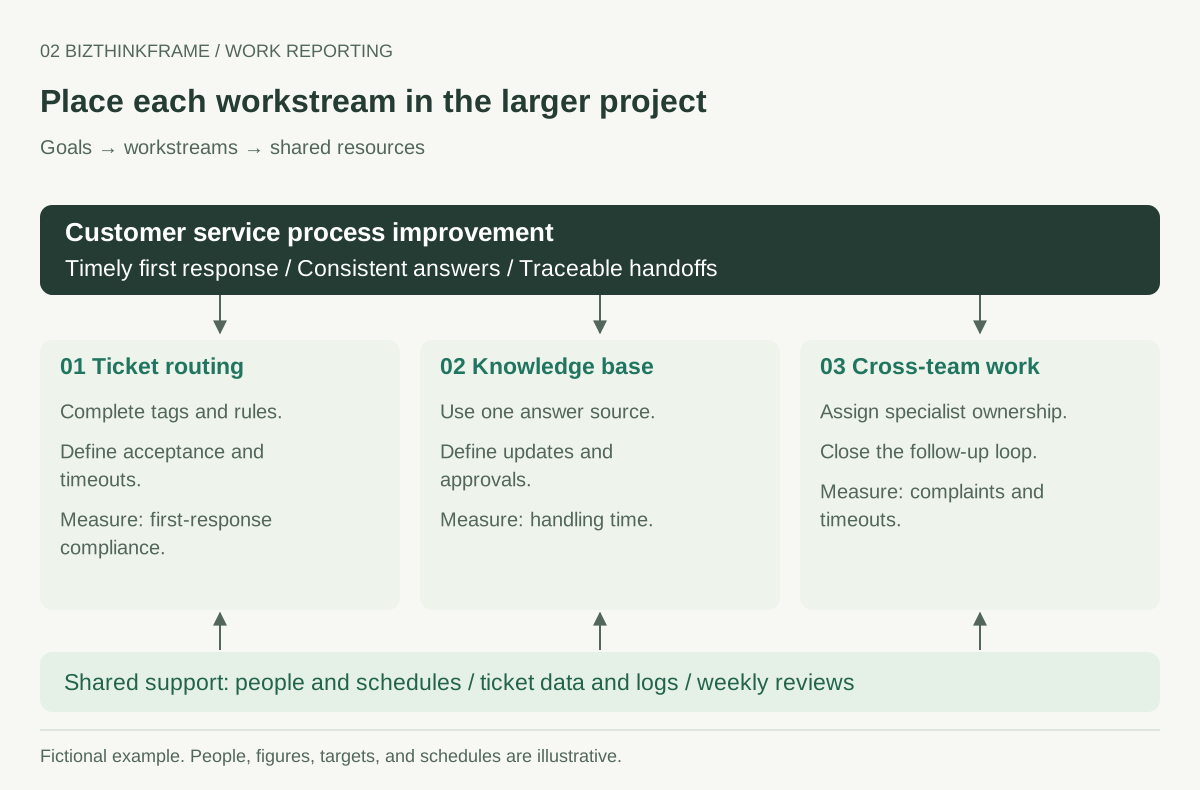
Figure 2. Show the whole project before expanding a particular workstream.
2. Lead with the result, then the risk and the request
Choose an opening for the purpose. To share results: “First-response compliance is 93%, two percentage points below the 95% target.” To request support: “Please confirm two person-days of testing support by the end of Tuesday; rollout depends on the tests and pilot.” To review: “Two of three targets are met; next we will investigate cross-team response.” These are wording exercises using the fictional case below.
Prepare four pieces of information: the result so far, the material risk, your proposed response, and the next action. Distinguish an update for awareness from a request for coordination or a decision.
A short spoken update in this example could be:
In this example's comparison of two periods with 1,200 closed tickets each, first-response compliance rose from 86% to 93%, below the 95% target; the cause of the change still needs checking. The next risk is integration testing: without another two person-days of support, the full rollout would move from week 4 to week 5. Please confirm that support by the end of Tuesday. In the meantime, we can keep manual routing. Week 4 remains conditional on passing all integration tests and the week 3 pilot meeting the target. I will update the test results and schedule on Friday.
Use three layers and expand when needed
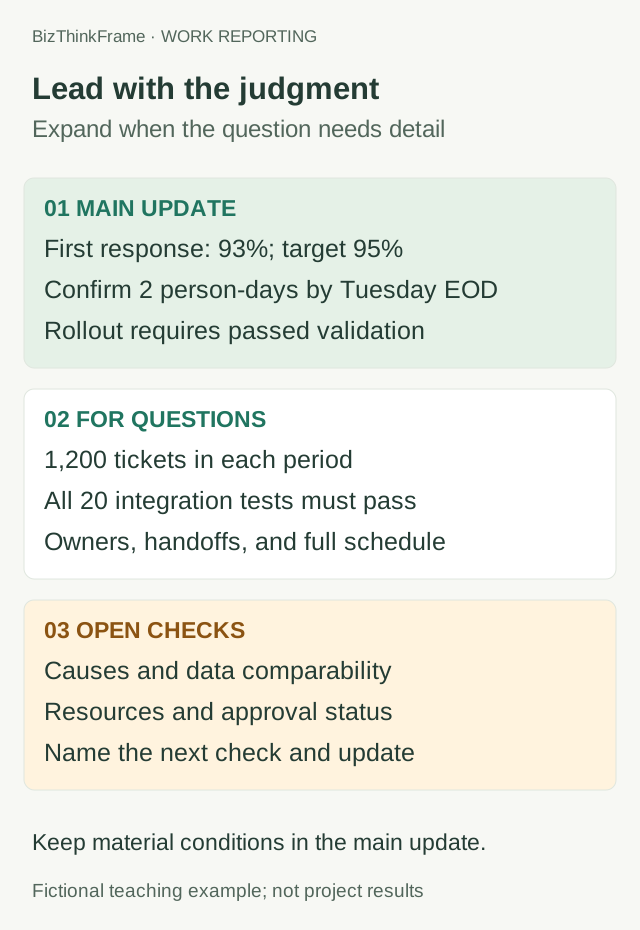
Figure 9. The main update, supporting detail, and open checks come from the same working notes. You do not need to read every layer in order.
| Layer | Material in this example | How to use it |
|---|---|---|
| Main update | 93% result and 95% target; testing risk; two-person-day request, response deadline, and rollout conditions | Lead with what changes the required judgment |
| For questions | 1,200 tickets in each period, metric definitions, 20 test cases, ownership and handoffs | Expand for the relevant question |
| Open checks | Causes of improvement, resource availability, and approval | State what is unknown and when it will be checked |
Do not hide a material risk in an attachment. Keep limitations that change the conclusion in the main update. If asked why results improved, explain that work mix and staffing still need comparability checks; the change cannot all be attributed to routing rules. If asked whether week 4 is certain, explain that all 20 integration tests and the week 3 pilot must pass. The rollout is a conditional plan.
With very little time, state the key judgment and request. Add reasons and detail when time allows. Use the manual one-minute rehearsal to say your script aloud, measure the time, and note edits. It retains the script for each completed attempt and its timing; it records no audio and does not rate persuasion.
Adapt the same material to the medium
| Medium | Show first | Keep as support |
|---|---|---|
| Spoken update | Current judgment, main risk, and response needed | Evidence available for questions |
| Message | Project and checkpoint, short summary, specific request and deadline | Checkable record locations; record important decisions as agreed |
| Subject naming the issue; conclusion or request first; evidence, conditions, and next update | Complete tables, tests, and plans | |
| One-page brief | Conclusion, key evidence, tradeoffs, and decision needed | Full report and detailed records |
An update for awareness does not need an invented approval request. A real decision request needs more than “for your information.” Sending a message does not establish that support or a proposal is approved; check the actual reply.
Use the message and email card. For a request at the start of an email, see the BLUF email example. To group several supporting reasons, see the Minto Pyramid work example. They serve different tasks; you do not need both for every update.
The longer report can hold the detailed evidence and plan. Choose a diagram for the question it answers: a roadmap for timing, a swimlane for handoffs, or a results table for the target gap. A short summary does not require compressing every detail into one picture.
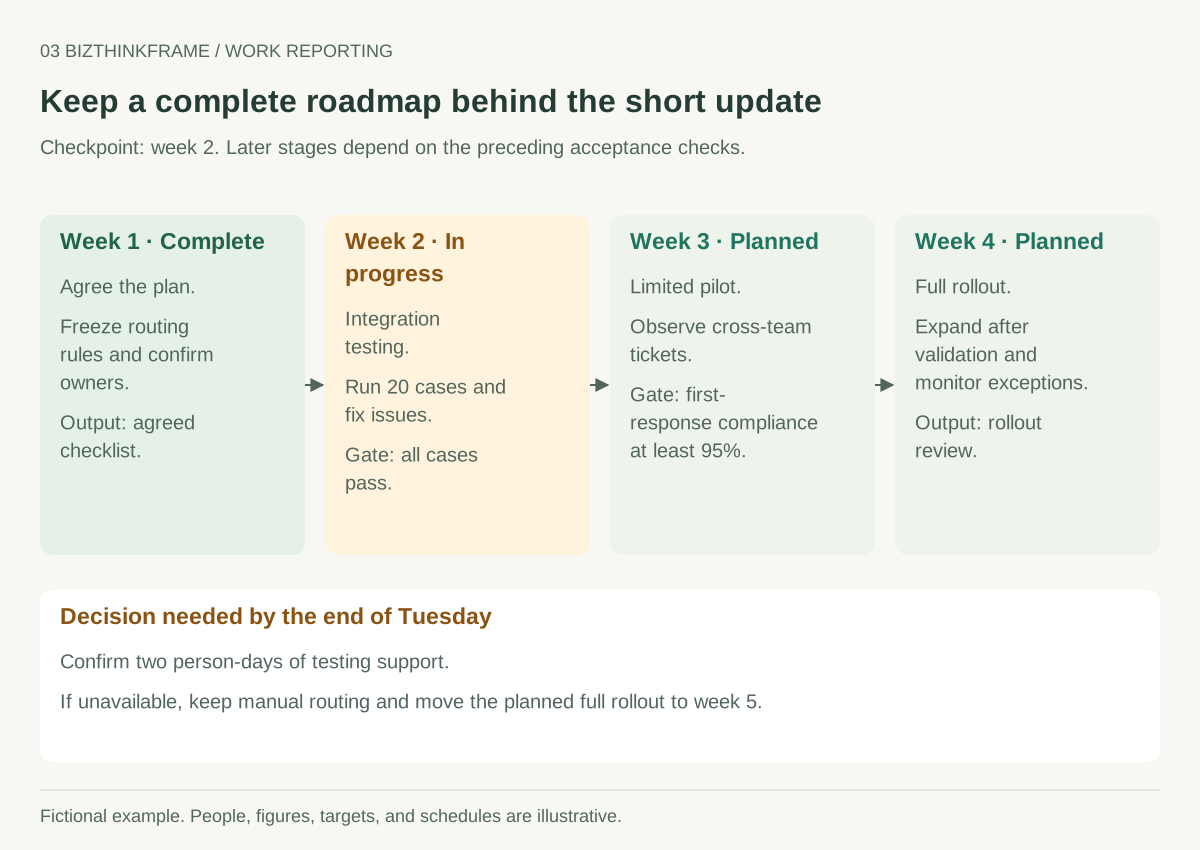
Figure 3. The next stages depend on acceptance checks; the dates are a plan, not a guarantee.
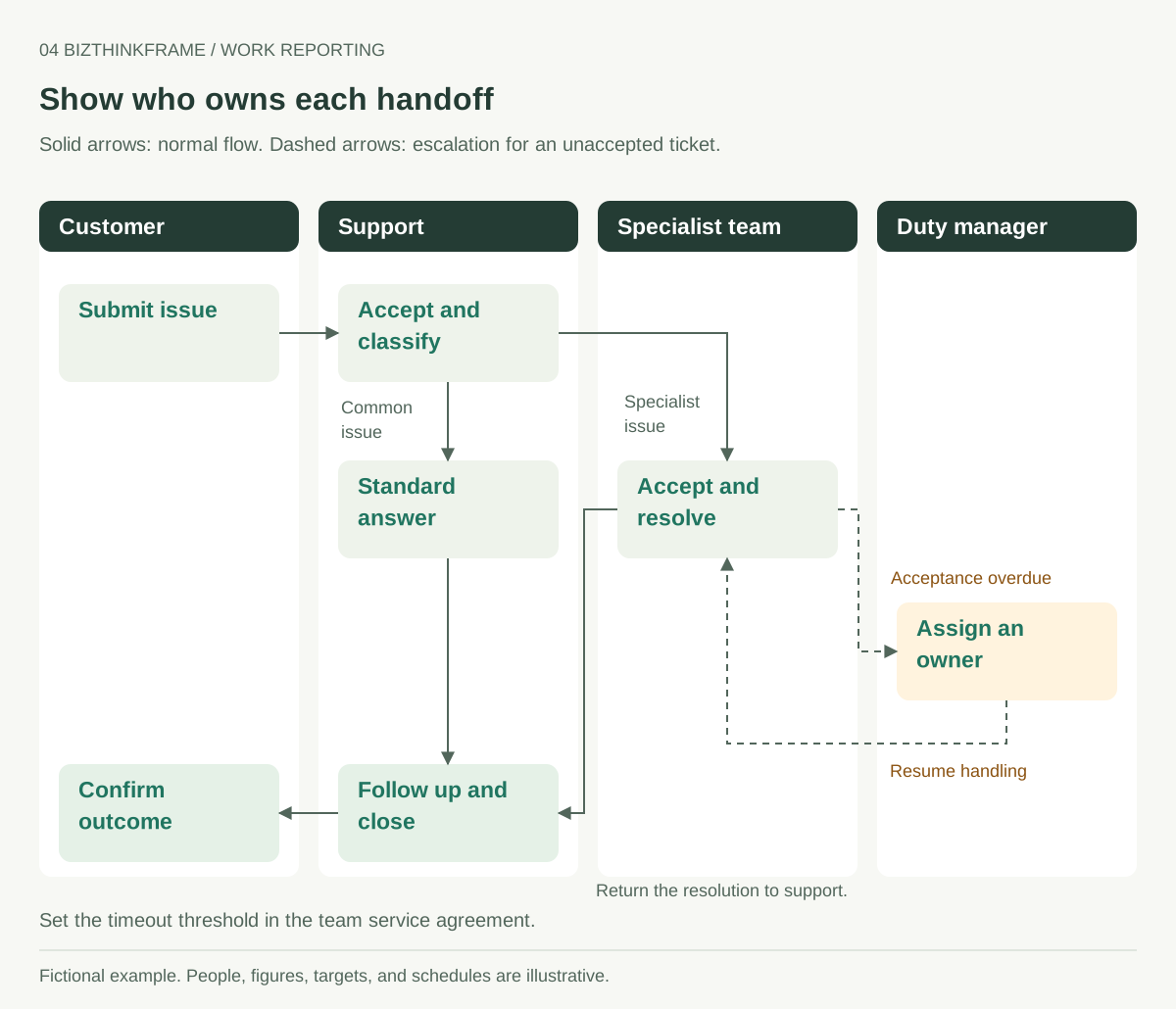
Figure 4. Use a swimlane to show ownership, handoffs, and the exception path. Agree the timeout threshold with the team.
For a short recommendation, use the PREP communication guide to connect your point, reason, example, and closing request. Preserve the distinction between a request for approval and an approved plan.
3. Explain what changed, with a baseline and a target
Keep three levels separate: what was delivered, what changed after delivery, and what the change may mean for the business. A completed knowledge base is a deliverable. Lower handling time is an observed change. A claim about profit would require additional evidence.
In this fictional comparison, the same team closed 1,200 tickets in July and 1,200 in August. The figures use the same definitions in both periods.
| Measure | July baseline | August pilot | Target | Reading |
|---|---|---|---|---|
| Average manual handling time | 18 minutes per ticket | 12 minutes | At most 12 minutes | Down 33.3%; target met |
| First response within 30 minutes | 86% | 93% | At least 95% | Up 7 percentage points; 2 points short |
| Complaints per 1,000 tickets | 18 | 12 | At most 12 | Down 6 per 1,000; target met |
Handling time means human handling time per ticket. Complaint figures are rates per 1,000 tickets. The targets are assumptions for this example. Two of the three targets are met; “all targets achieved” would misrepresent the result.
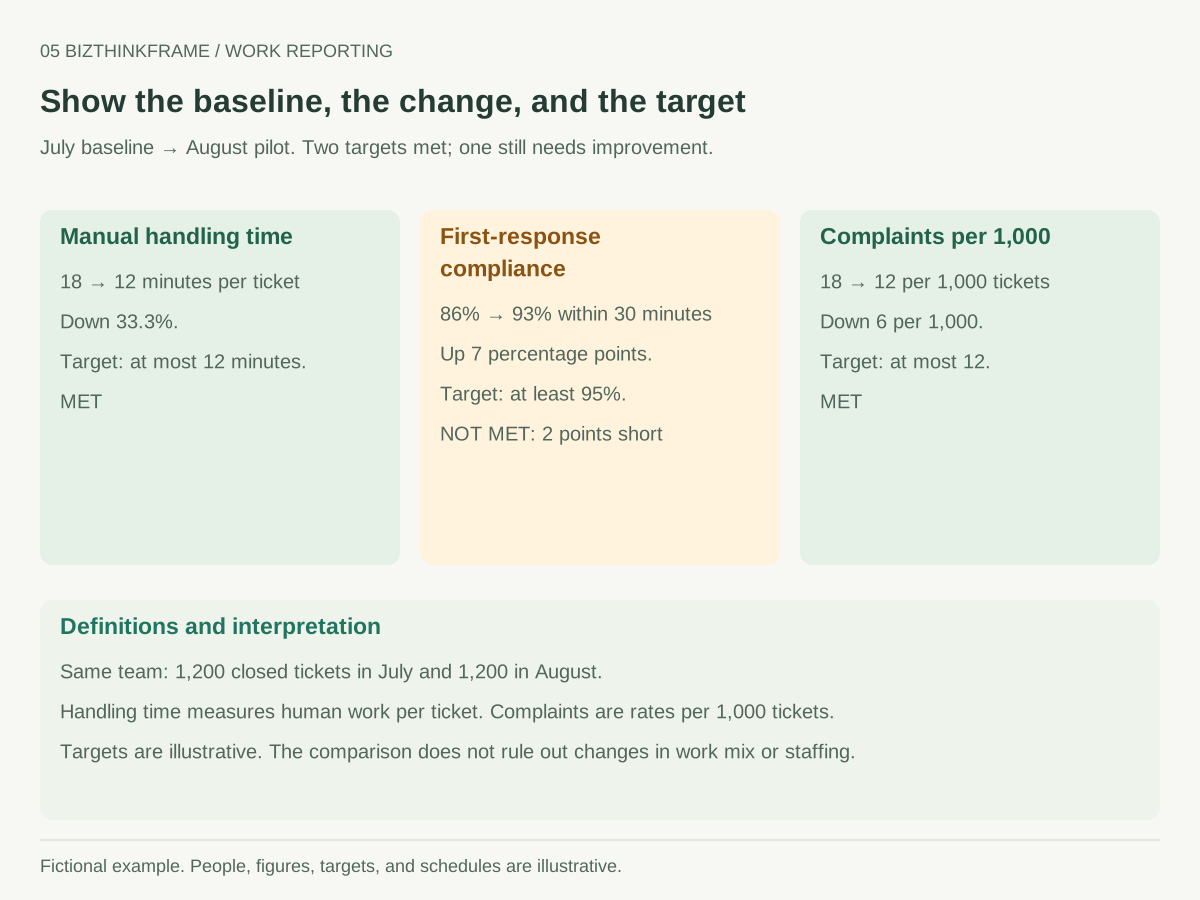
Figure 5. Baselines, targets, denominators, and definitions make the result checkable.
The comparison shows change, but does not isolate the process change as its cause. Work mix, staffing, and other factors may also have changed. Do not turn a before-and-after result into a causal claim without supporting evidence.
Separate team results from individual contributions. After describing the team's work, identify the deliverable or check you owned and its supporting record. Do not count the same team result once for every person. Use the results and evidence card, then the individual contribution example when you need more detail.
When the output is qualitative, describe what is available, who can use it, and what has been checked. There is no need to invent a return-on-investment figure for a process document or a newly agreed handoff.
4. Make the next step executable
A plan needs an owner, a deadline, an acceptance criterion, and any dependencies. “Continue improving collaboration” leaves too much undefined. “Chen Yue will complete all 20 integration test cases by Friday of week 2; all must pass before the limited pilot” can be followed up.
The example requires two additional person-days of testing support, confirmed by the end of Tuesday. Zhou Ning then owns the week 3 pilot, with first-response compliance of at least 95% as its acceptance threshold. Li Lan owns the planned week 4 rollout, conditional on the pilot passing. If resources are unavailable, retain manual routing and move the planned rollout to week 5. If validation fails, investigate before expanding; a later date alone does not remove that dependency.
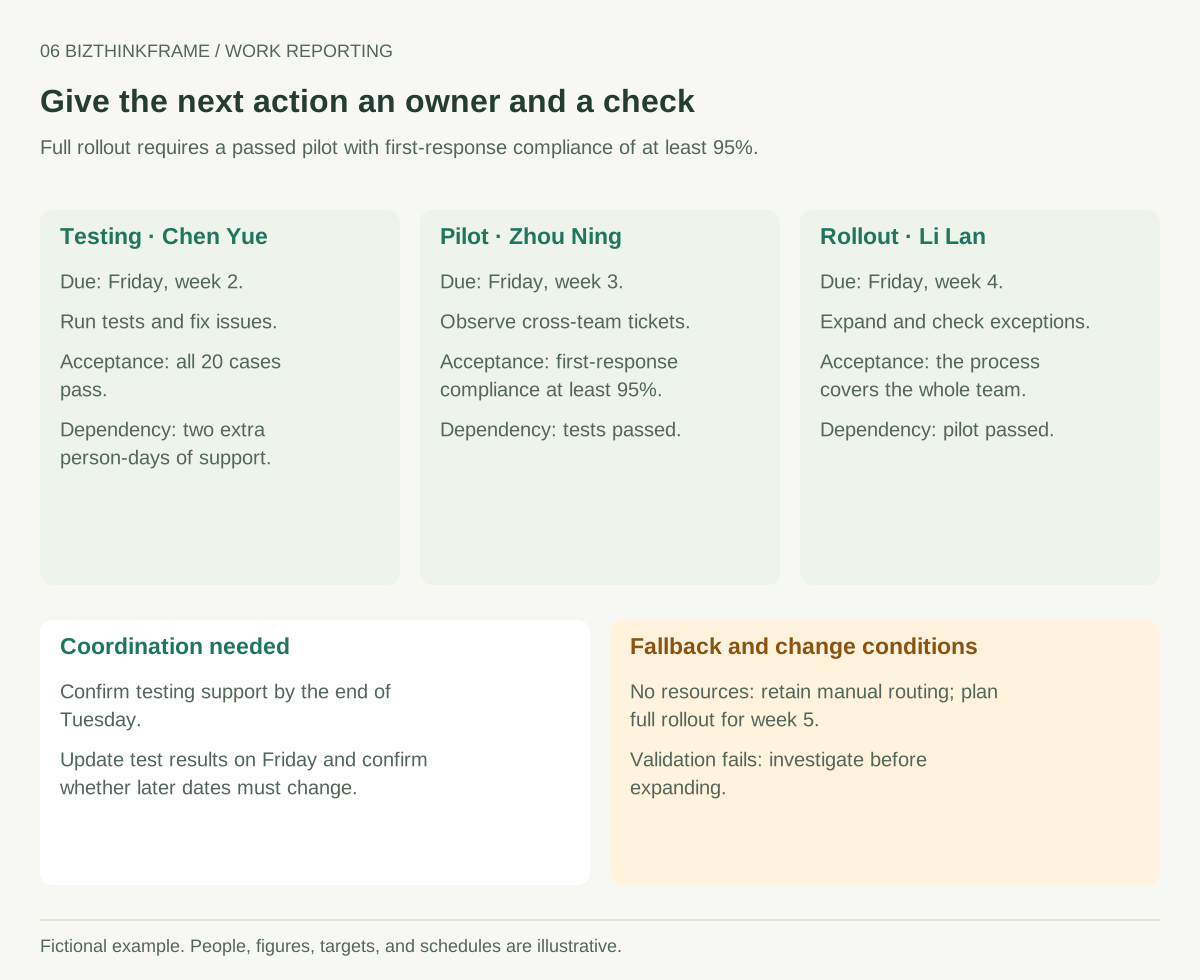
Figure 6. Include the request for support and the condition that would change the plan.
Use the next-plan card to check ownership, deadlines, acceptance, and dependencies. Separate an action check from outcome observation: passing 20 test cases does not establish that full rollout has achieved 95%. Two extra person-days are requested effort; record actual effort separately. Compare each update with the previous commitment and explain changes.
For annual planning, translate the direction into quarterly priorities and checks. Agree each metric's denominator, period, and sampling approach when the plan is approved. Record actual results separately from targets.
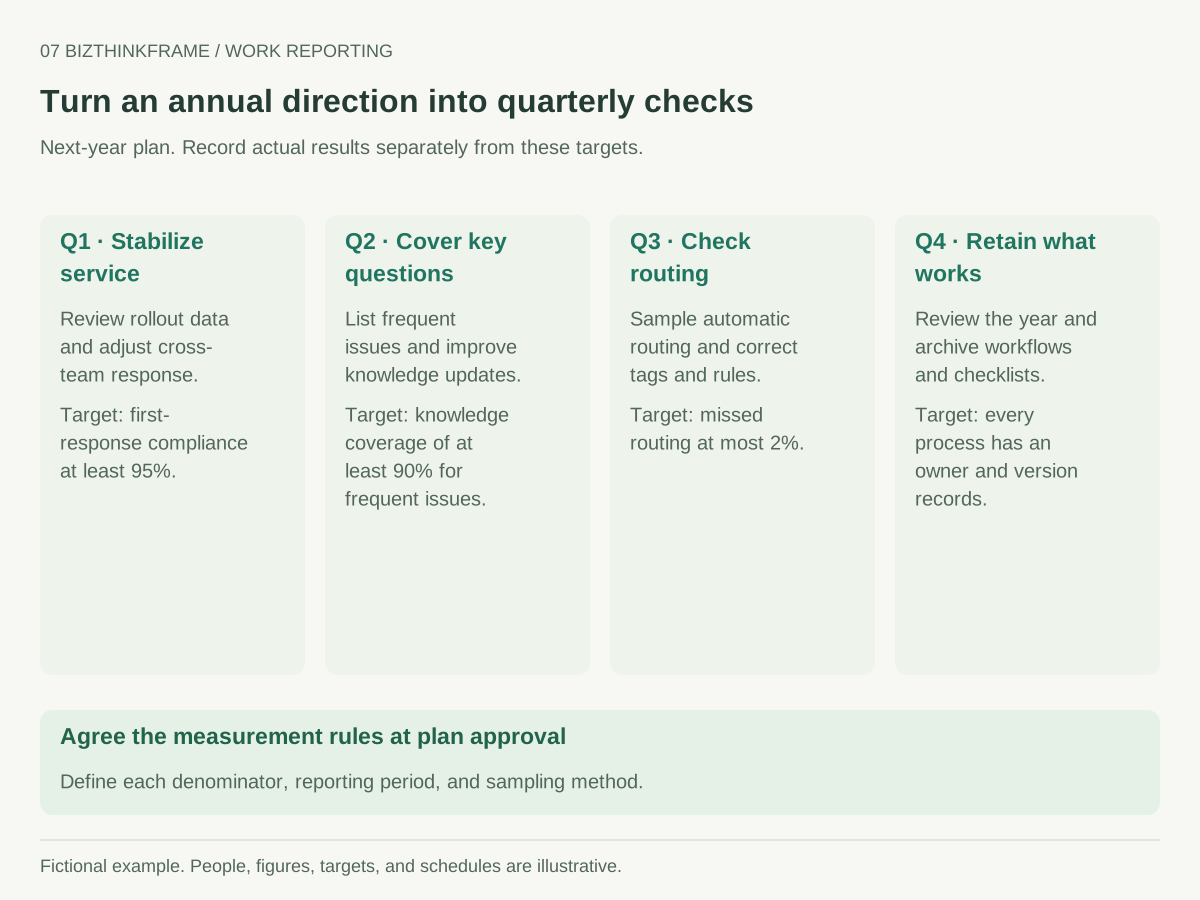
Figure 7. Quarterly checkpoints make an annual direction easier to review. These are future targets, not completed results.
Prepare evidence for an improvement request
For requested effort, continue to the resource request with alternatives, separating existing effort, the request and the total. If the process record is incomplete, use the business process inventory first; use ECRS for conditional options and a business improvement proposal for trial scope and approval. These are independent cases, not new evidence about this service pilot.
Clarify the activity and reserve time
Use 6W2H when participants, purpose or constraints are unclear. Use the Urgency–importance matrix when activities compete for time. Choose for the current question and keep authority and capacity open where unconfirmed. Time allocated is not work completed.
5. Review results and improve the next cycle
A period review should connect the original goal, the observed result, the main differences, and the next adjustment. In this example, two targets are met and first-response compliance still needs improvement. The next step is to verify cross-team handling before expanding the rollout.
Keep the schedule separate from the result. A Gantt bar shows when a task is scheduled. Its length does not demonstrate how much is complete or whether the work met its acceptance criteria.
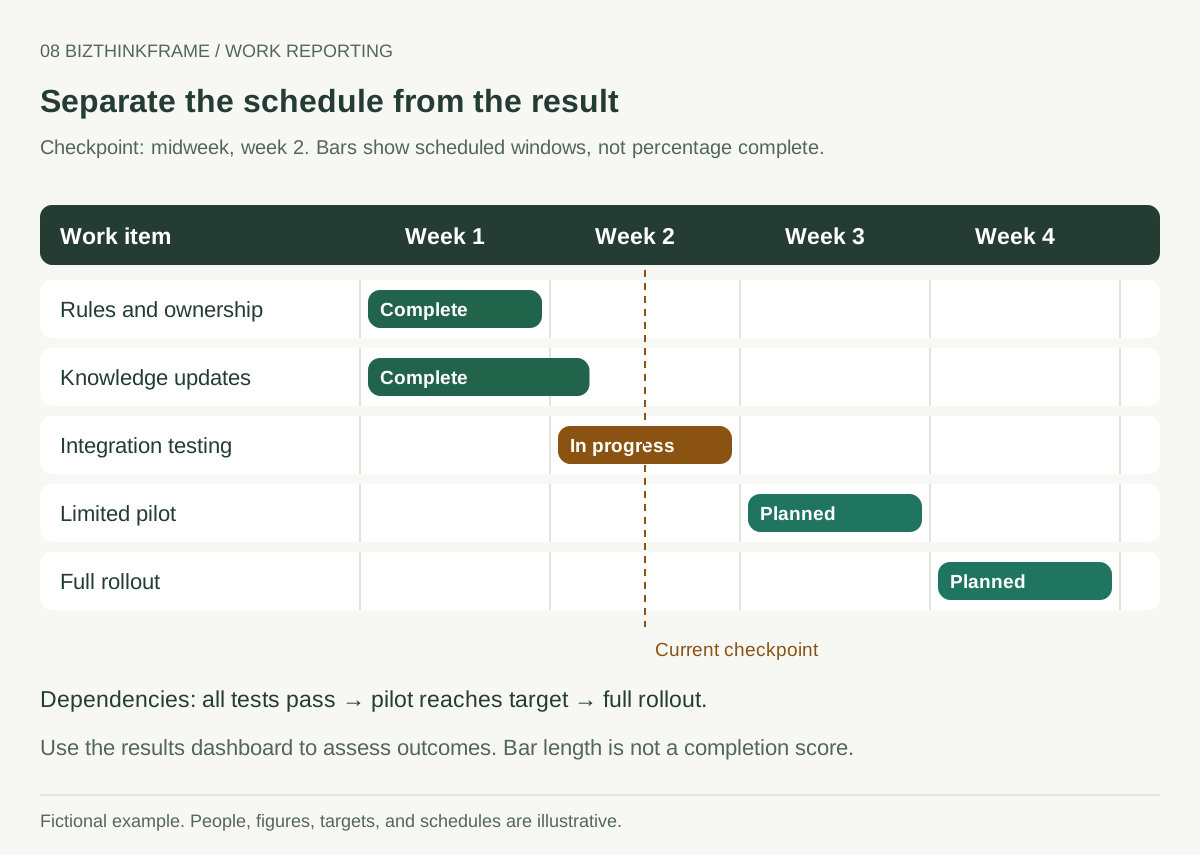
Figure 8. The checkpoint is midway through week 2. Pilot and rollout remain conditional on the preceding checks.
Make the lesson specific enough to change a future action. “Coordination should improve” is difficult to use. “Testing support was not secured early enough; at the next plan signoff, confirm the owner and the available testing window” identifies a practical change.
Use the KPT retrospective guide to separate practices to keep, observed problems, and one change to try next. Give that experiment an owner and a review point, or mark those details as unconfirmed.
Choose a reflection or team discussion for the question
For a personal experience, YWT connects what you did, learned and will do next; KPT addresses practices, problems and experiments. PM leadership theory addresses goal support and group maintenance; the Need–Want matrix addresses necessary work and willingness. Check interpretations with the people involved; delivery figures do not establish how members feel.
Follow up with feedback, support, or coaching
Use the Johari window to compare understandings through voluntary feedback, respecting privacy. Use Herzberg’s two-factor theory to discuss obstacles and growth opportunities. For the general method, read GROW. For a development conversation, continue to the GROW practice guide, separating suggestions, personal choices, support requests and actual confirmation. These optional routes neither infer motivation or commitment nor add evidence about this service pilot.
Leave a next action that can be checked
In this case, KPT could retain the shared knowledge entry point as a practice to keep; identify the two-percentage-point response gap and unconfirmed testing support as problems; and propose checking cross-team response before testing the next arrangement. Keeping a practice does not prove it caused all the improvement. A Try item is not a completed result.
To turn the review into a next-period update, read from retrospective to next plan. Use your own records to name the owner, observation window, measurement rules, and next check.
Check the update before sending it
- Does the opening state the overall position?
- Are the period, definitions, baseline, and supporting evidence clear?
- Does each material risk include its impact, response, and remaining unknowns?
- Does the next action have an owner, deadline, and acceptance criterion?
- Is it clear whether the reader is being informed, asked to coordinate, or asked to decide?
Use the editable outline below to prepare your own update: overall position; key result and evidence; risk and impact; proposed response and reason; next action, owner, deadline, and acceptance; and the specific request. Keep only what helps the reader make the required judgment, with supporting detail available when needed.
Download the blank working outline, or enter your own material in the work-update tool for a progress update, decision request or period review. Check the judgments, facts and approval status before copying or exporting.
Start with a useful outline
Practice materials
- Blank working outline for a brief updateTXT · 1 KB