
Solve a specific work problem
Find a situation like yours. Follow the example, check the reasoning, and take an outline or calculation into your work.
22 practical guides
Define problems and investigate causes
Start with observations and records. Define the problem, examine possible causes, and identify missing evidence.
- As-Is / To-Be
- AARRR
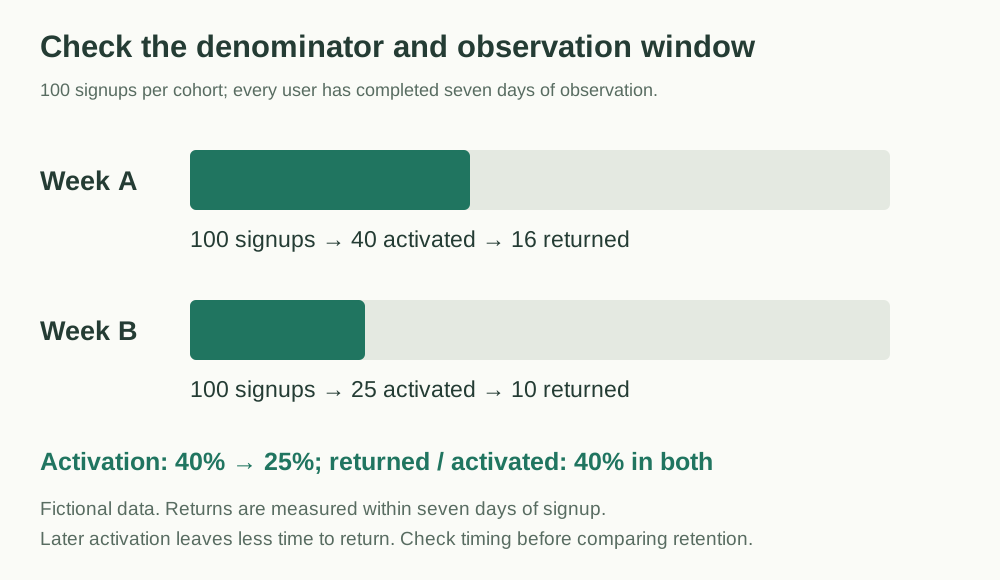
New users aren’t coming back. What should you check first?
Switch denominators for the same cohort counts, distinguish the first task from later use, and leave with a bounded problem statement and evidence plan.
- 5 Whys
- Logic tree
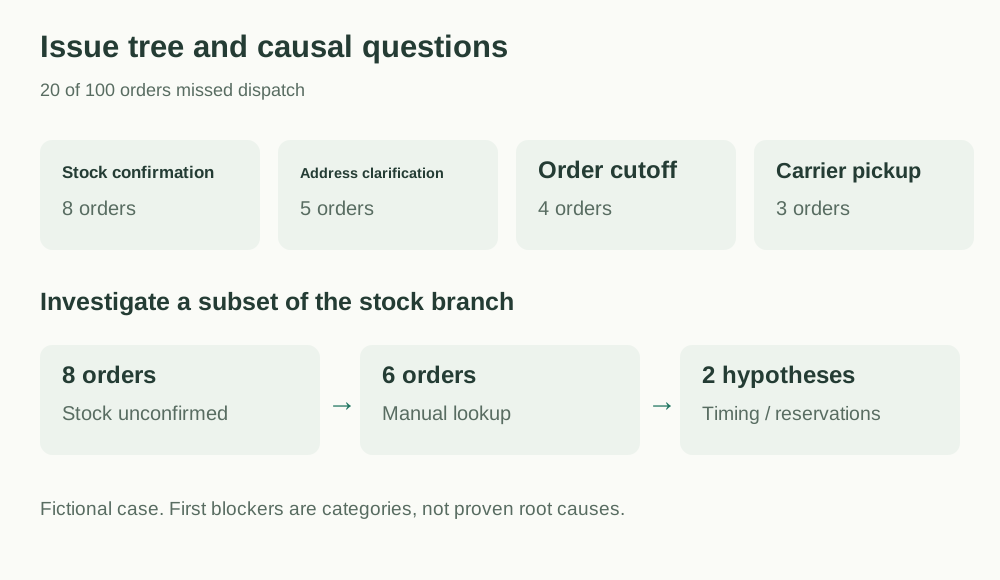
The cause is unclear. What should you check first?
Trace the scope of explanations through fictional late orders, retain unexplained cases, and leave with evidence status and a next investigation step.
Compare options and make decisions
Explain constraints, evidence, and tradeoffs. Leave a decision that can be reviewed.
- Decision matrix
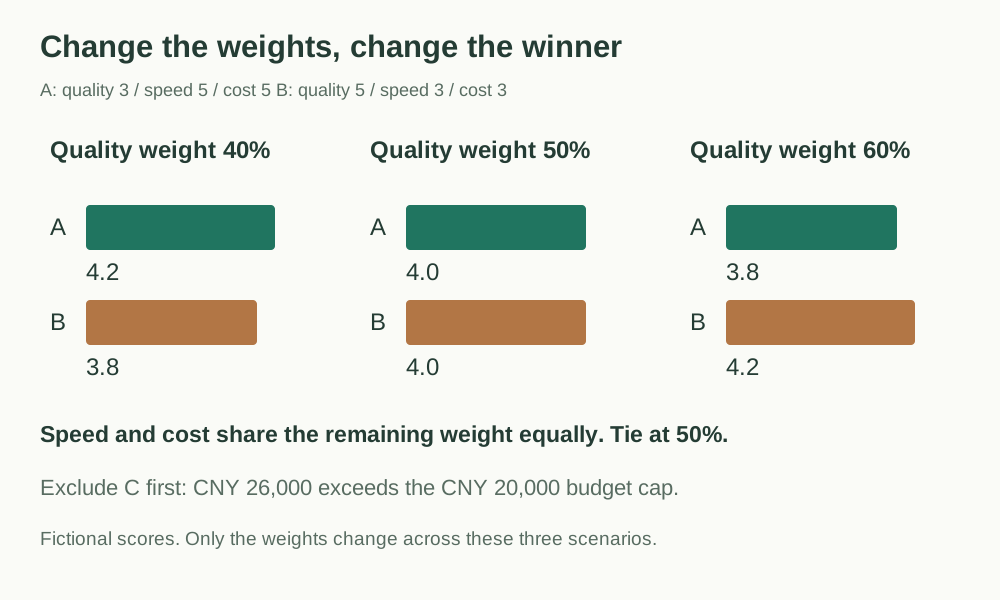
When a weighted decision matrix changes its winner
Recalculate a fictional procurement ranking reversal, check budget limits and comparable scores, and record tradeoffs and unresolved conditions.
- Decision matrix
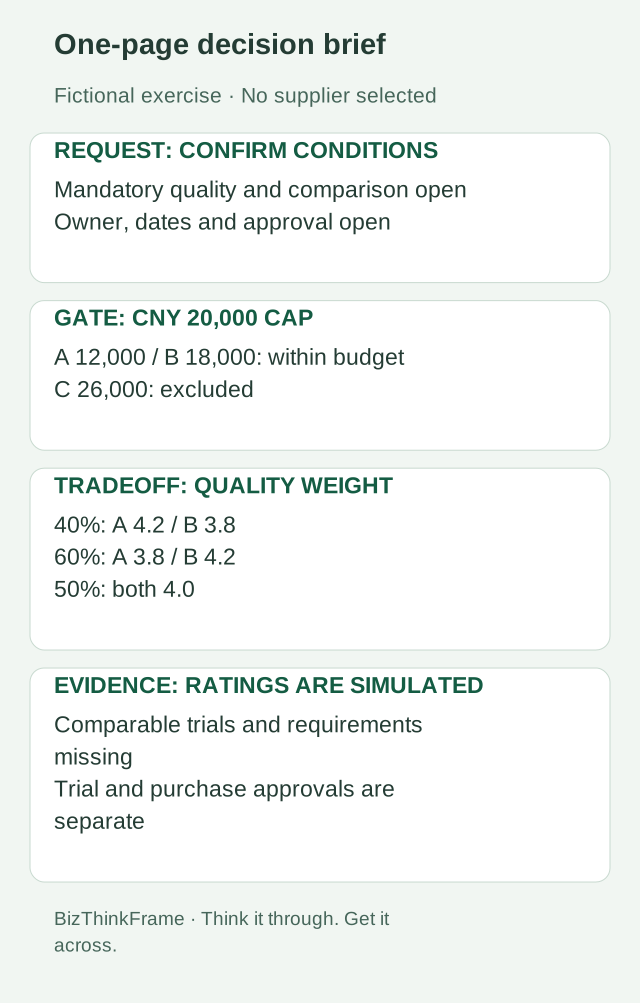
A one-page decision brief: what needs a decision now
Distinguish requirements, trial and purchase requests. Inspect the main brief and supporting detail using the same supplier material, retaining gates, evidence gaps and pending approval.
Develop strategy and take action
Turn analysis into possible actions, small tests, and a next review.
- SWOT
- TOWS
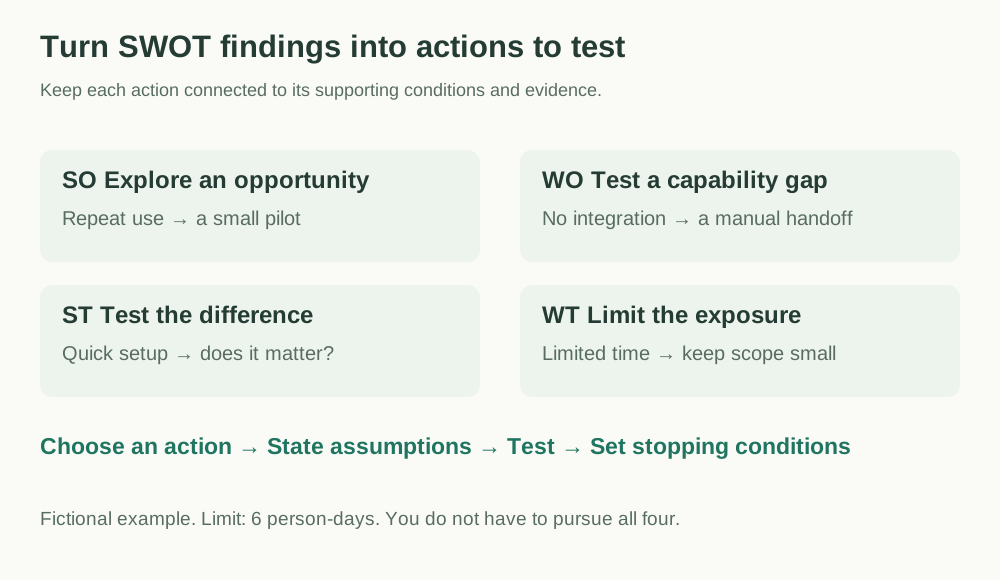
After SWOT: turn an idea into a testable action
Trace an action to its conditions, then retain assumptions, a test, effort limits, and stopping conditions in a small plan you can review.
- ECRS process improvement
- Business process inventory
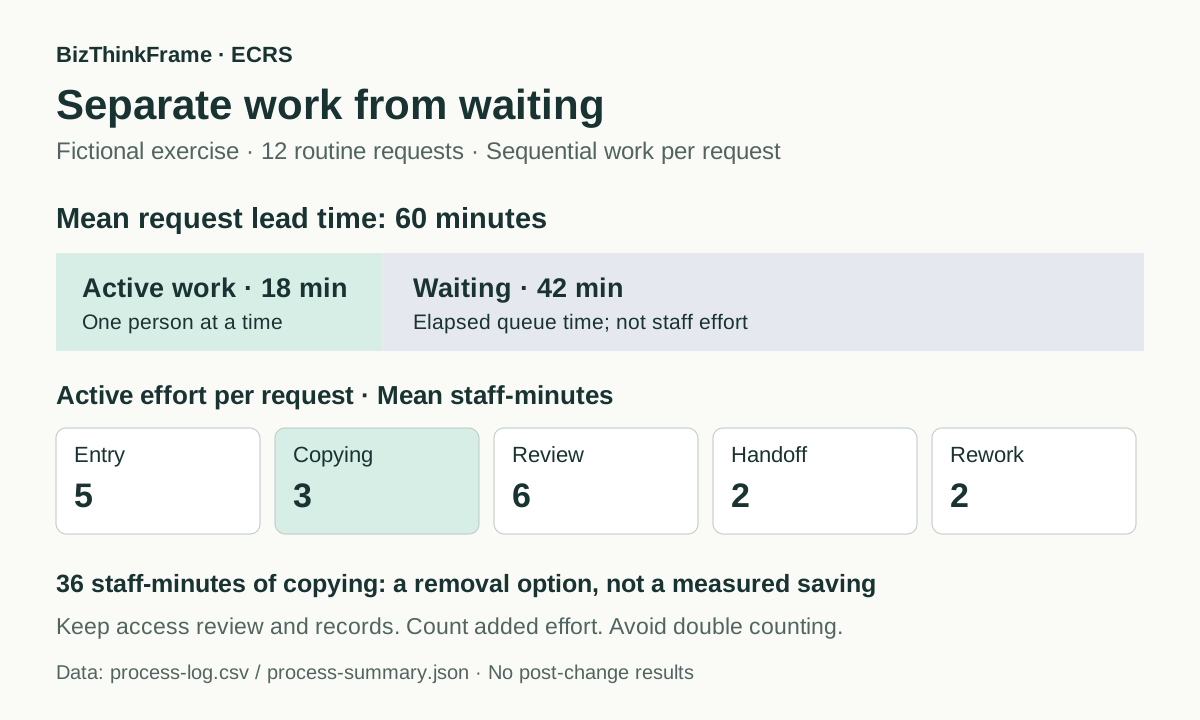
A process is slow. What is worth changing first?
Separate active effort, waiting, and lead time; estimate one ECRS change, show setup separately, and retain quality controls and pilot conditions.
- KPT retrospective
- YWT reflection
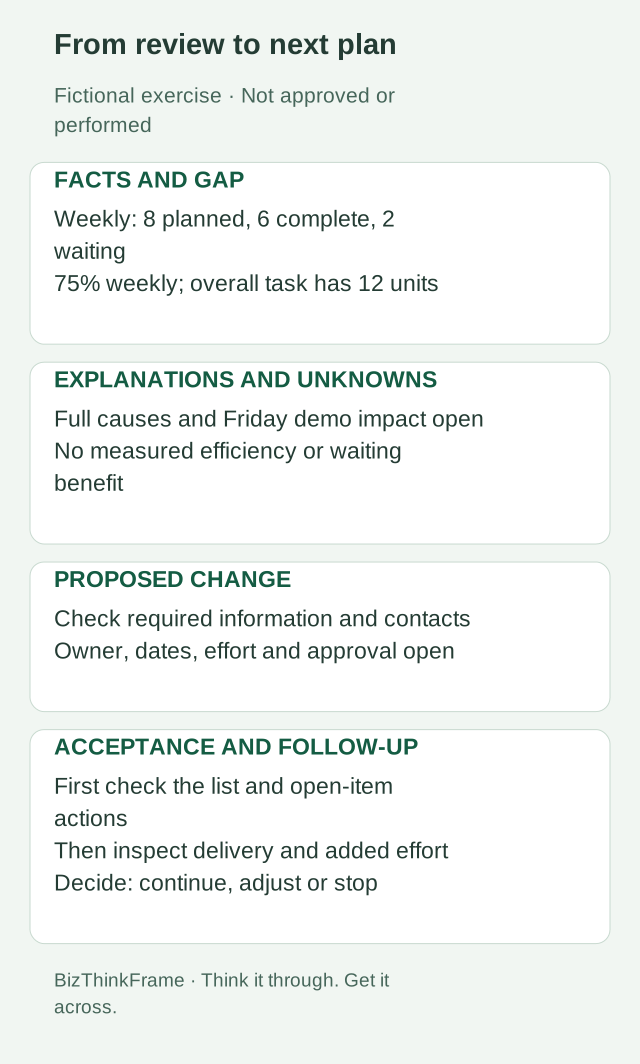
Turn a work retrospective into a next-period plan you can check
Retain the initial version of one improvement and append execution and evidence reviews; distinguish completion from effects and decide what comes next.
- Business model canvas
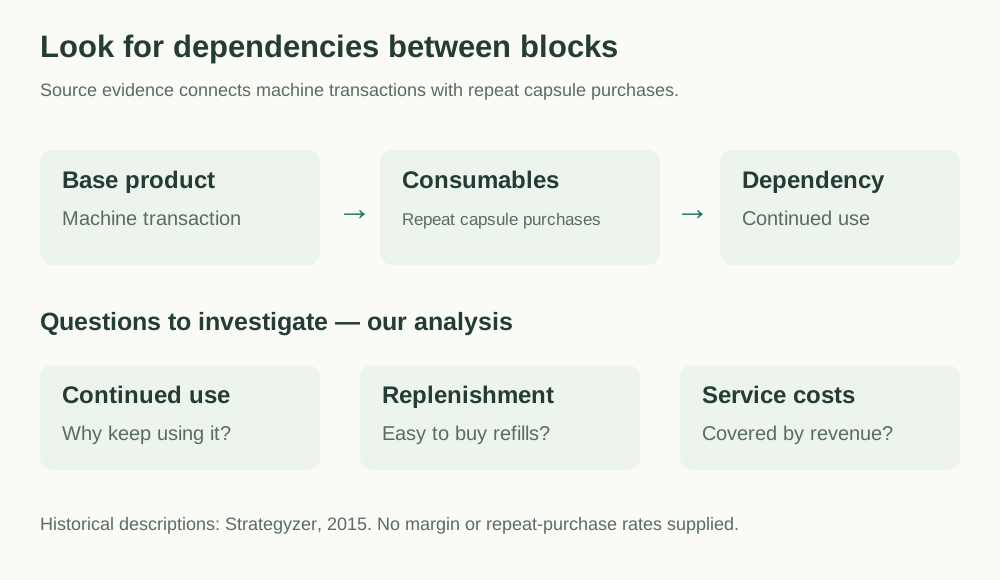
What Nespresso illustrates about business model dependencies
Use historical teaching material from 2015, explore continued-use and refill premises in a fictional project, and prepare one assumption and test for your own business.
Report work and communicate
Explain progress, risks, evidence, and requests. Prepare a conversation with concrete material.
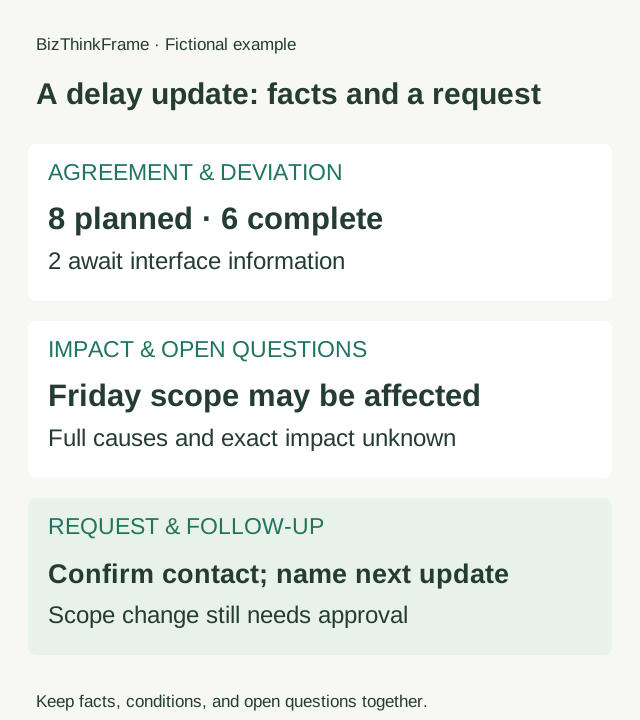
How to report a project delay and make a clear request
Compare an agreement with the deviation, separate known and possible impacts from proposed causes, and retain requests, update times, and unapproved alternatives.
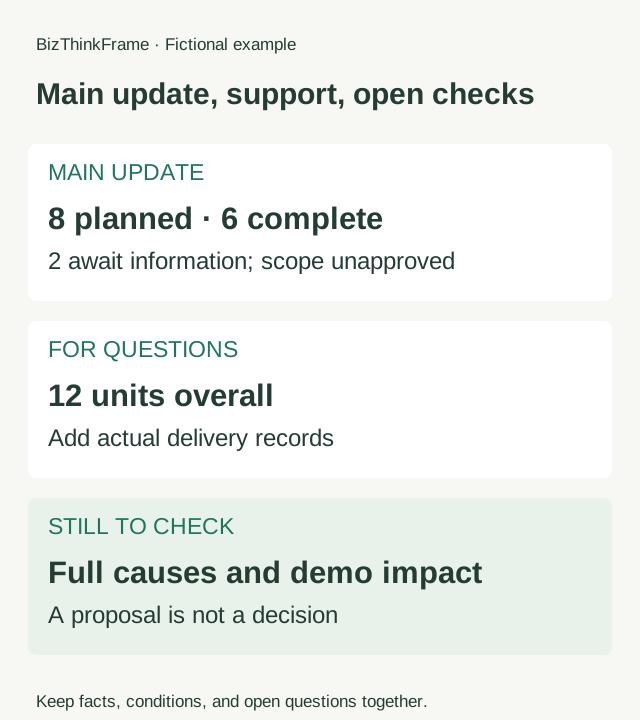
- PREP communication
A one-minute update: what to say and what to keep for questions
Compare edits of the same configuration material, retain requests and conditions, then rehearse aloud and compare two completed scripts with revision notes.
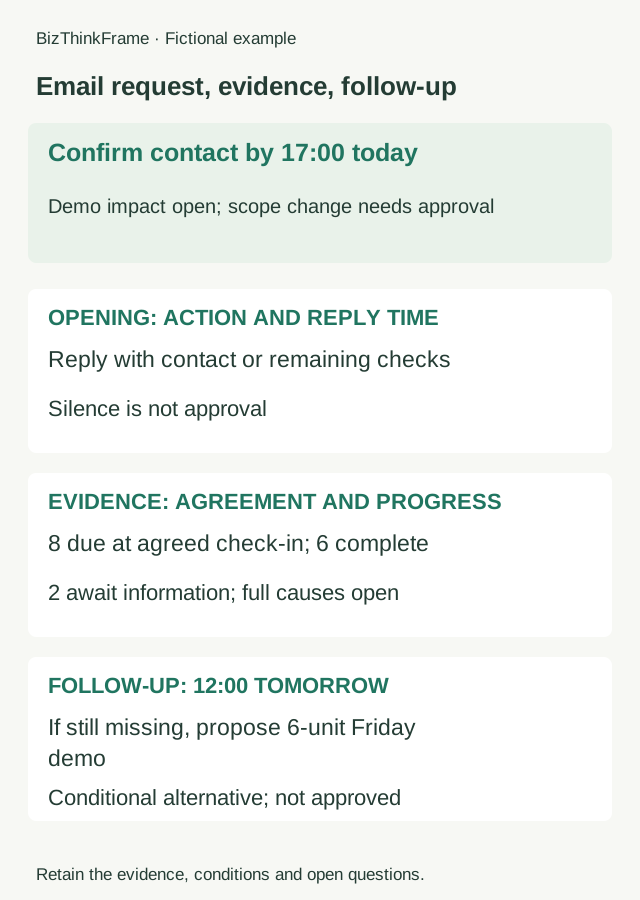
BLUF format: write a work email with a clear request
Compare complete original and revised emails. Inspect the opening and review whether requests, deadlines, conditions, and approval status remain intact.
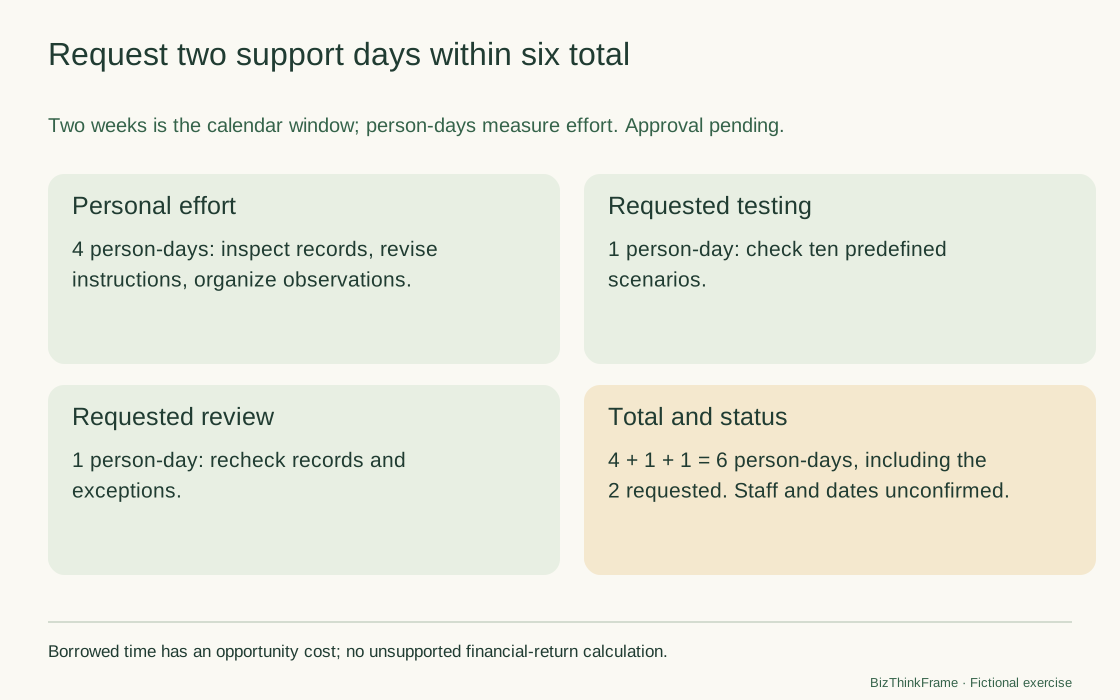
How to request support with clear effort and alternatives
Reconcile existing effort, the additional request, and the total; compare feasible alternatives and prepare a complete request with checks, stopping conditions, and approval status.
- Decision matrix
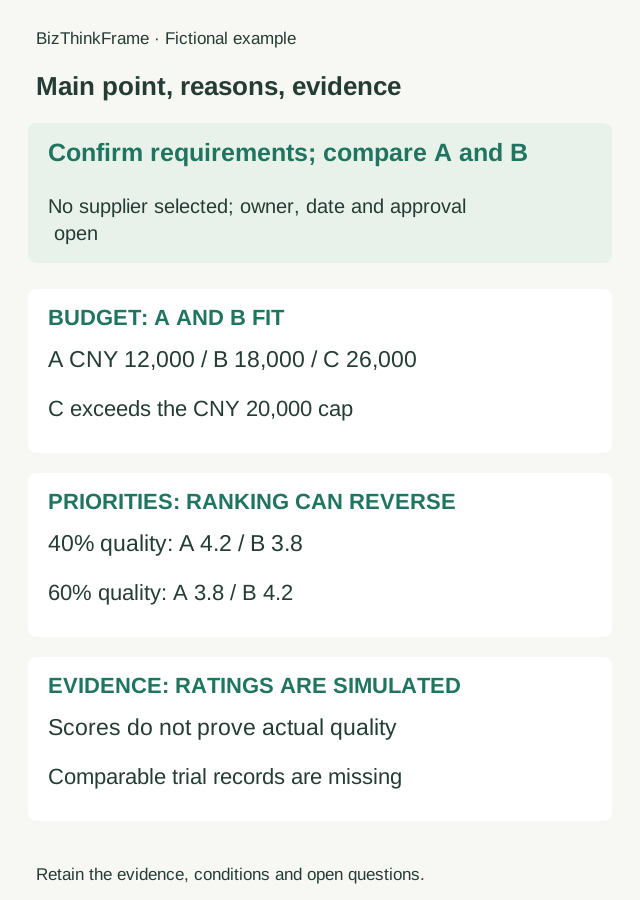
Minto Pyramid: build a work proposal your evidence can support
Connect a complete proposal to its reasons and evidence. Distinguish budget limits, tradeoffs, and missing checks while retaining the original and review notes.
- Decision matrix
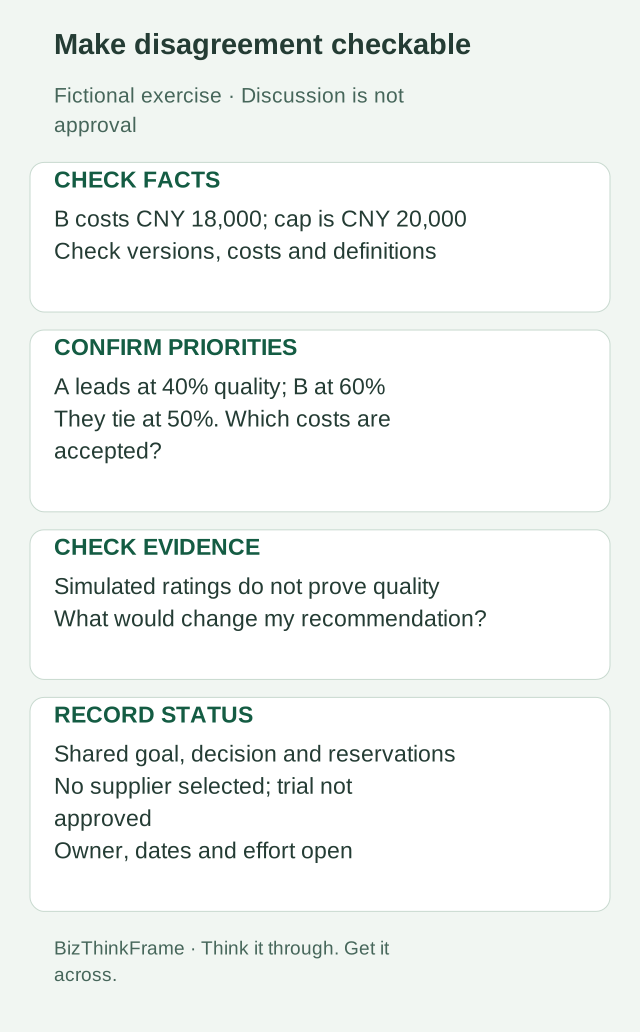
Disagree with your manager by making the decision easier to check
Distinguish facts, priorities and evidence gaps, compare questions to check, and retain full discussion material, actual replies, authority and open issues.
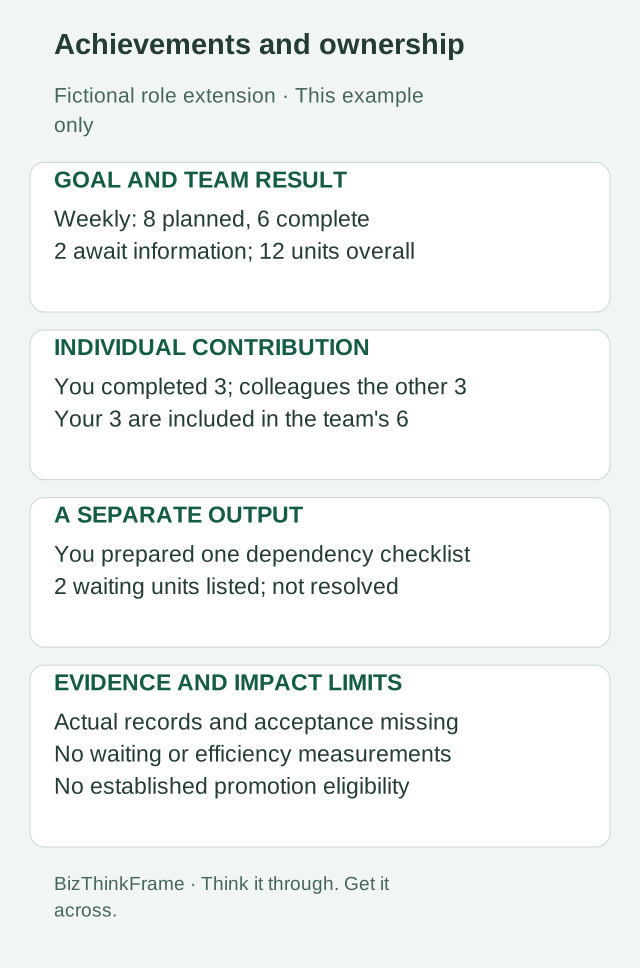
Describe work achievements with clear ownership and evidence
Select a statement from your summary to check ownership, deliverables and evidence, retaining the original text and unknown impact.
- GROW model
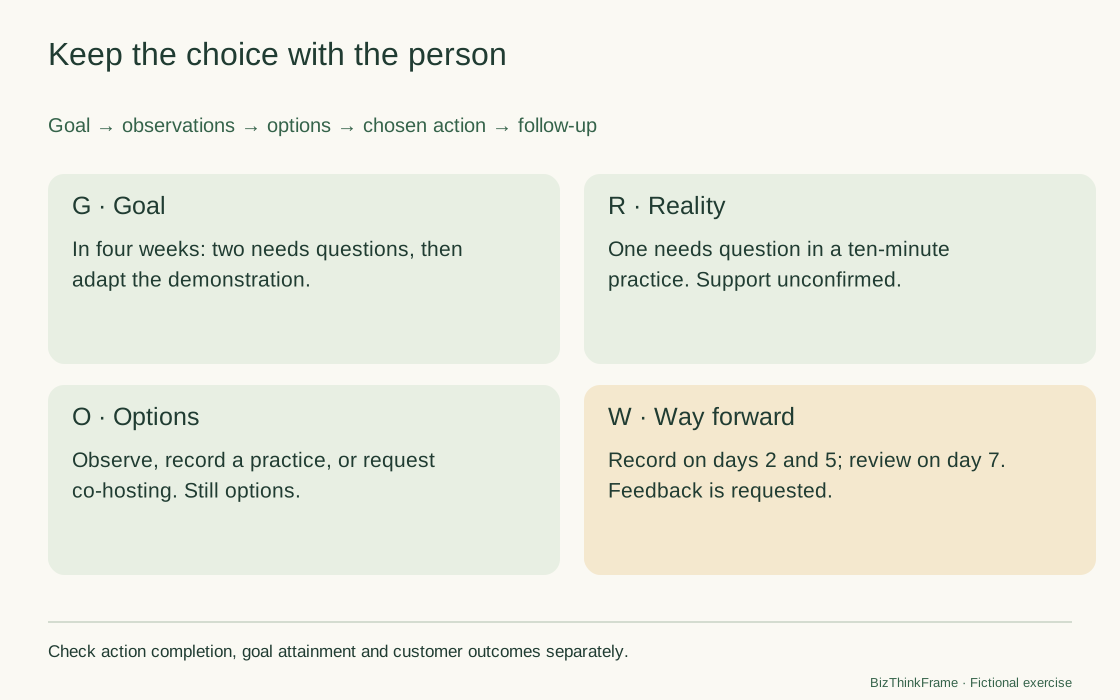
A GROW coaching conversation from open questions to follow-up
Compare open questions, leading responses and necessary instruction, then inspect chosen actions, manager suggestions and support in a complete conversation.
- PREP communication
- KPT retrospective
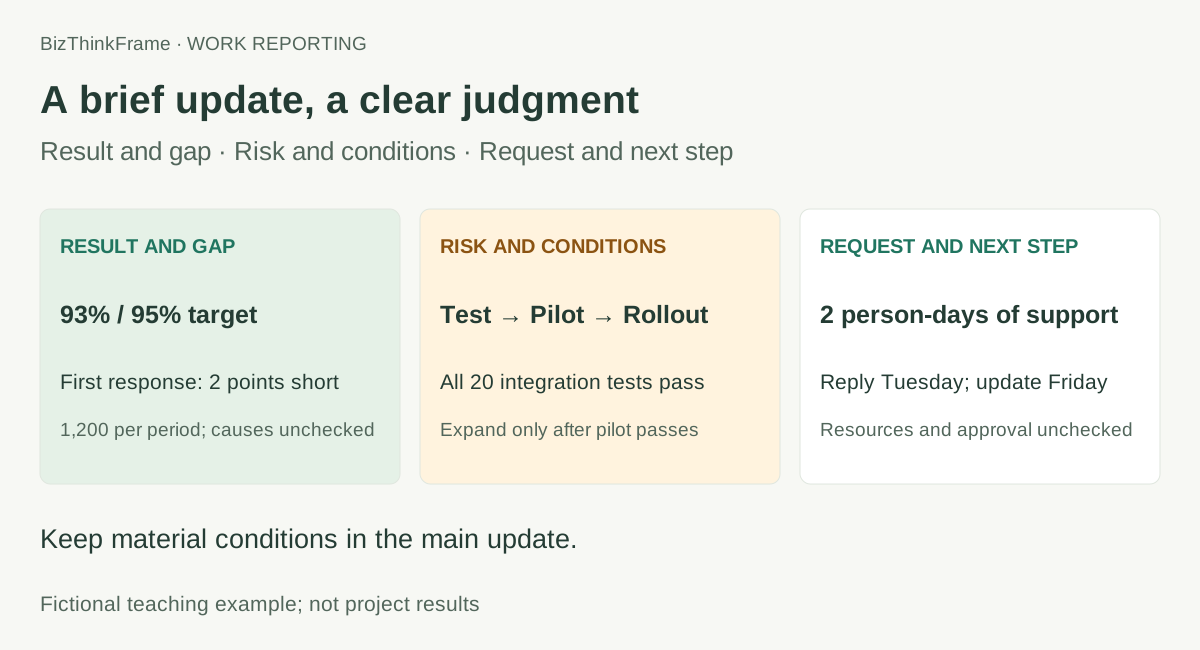
Prepare a work update: start with the purpose
Choose a preparation route for progress, a resource or decision request, or a period review. Use one service case to inspect openings, review checks and focused guides, and keep a preparation note.
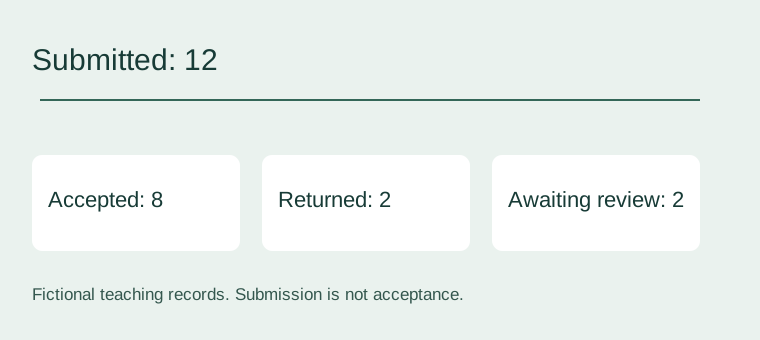
Hand off work when two teams mean different things by done
Reconcile twelve fictional handoff records, distinguish submission from acceptance, and prepare criteria, a meeting script, an email and a review worksheet.
Analyze data and present results
Check counts, rates, and distributions. Choose charts and wording that answer the question.
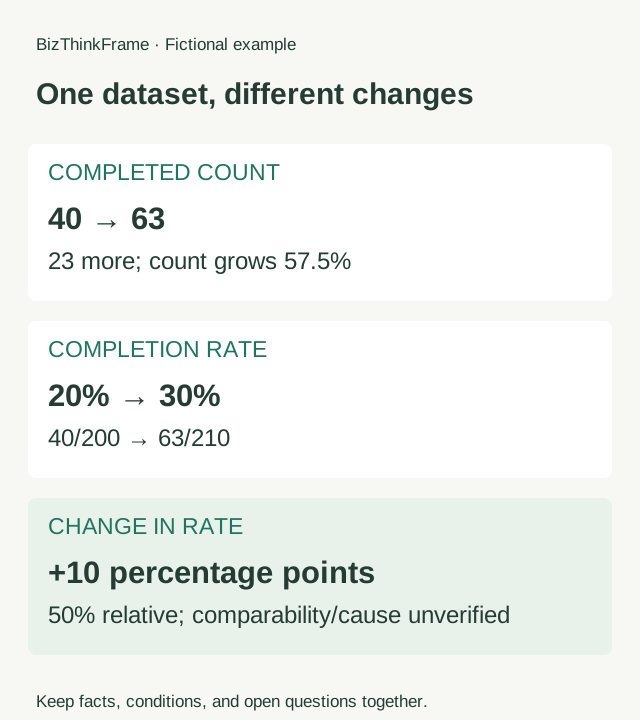
Percentage points vs. percent change in a work report
Recalculate 40/200 and 63/210. Distinguish a 10-percentage-point rise, 50% relative rate growth, and 57.5% count growth, retaining comparability and causal limits.
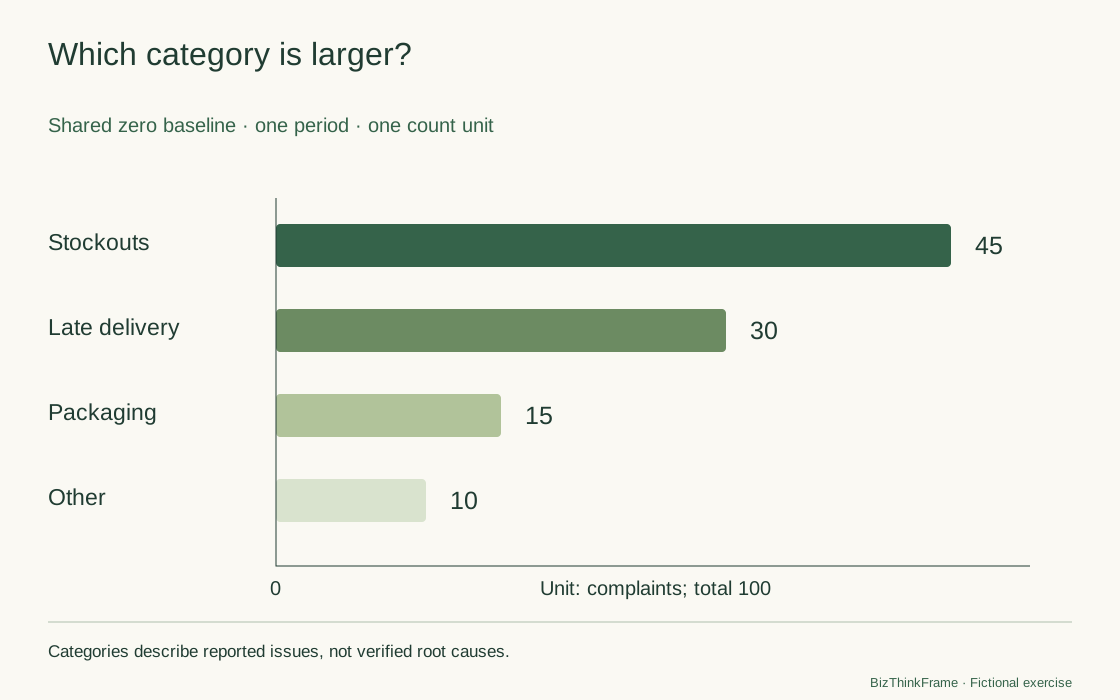
Which chart fits your work update? Start with the question
Switch questions for the same complaint totals, check chart conditions, and retain the choice rationale, definitions, and missing evidence.
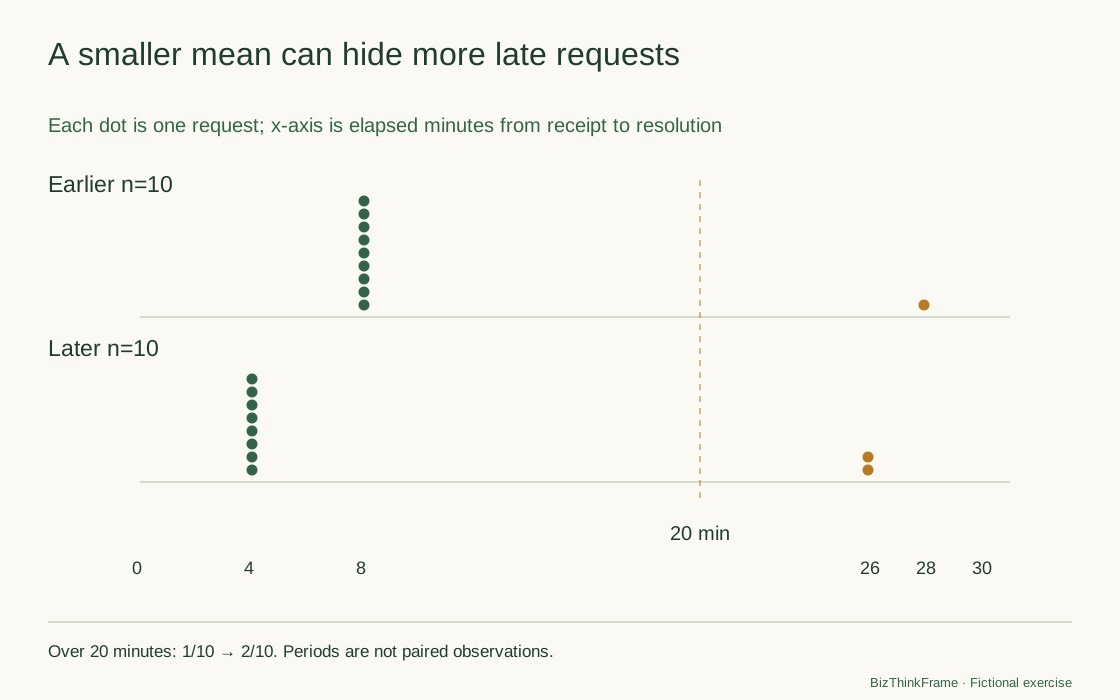
Why late requests can increase while average elapsed time falls
Paste two-period elapsed times, check the mean, median and late counts, and retain missing/open records and limits in your report.
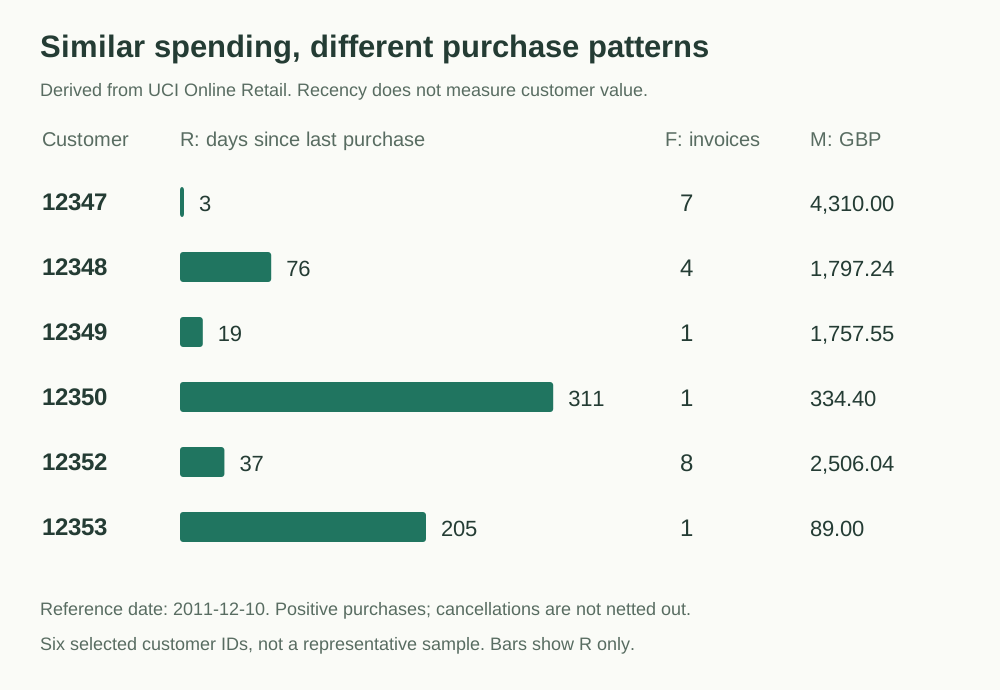
- RFM
- Pareto
Work through an RFM analysis with public retail data
Reproduce historical retail RFM results, compare filtering rules and customer lists, or paste aggregated customer results with definitions and investigation notes.